Key Research Guiding Our Methods
(This page is formatted to print on 8 1/2 x 11)

#1. HBR Summary: Why Strategy Execution Unravels-and What to Do About It
Harvard Business Review · March 2015 by Donald Sull, MIT, Sloan School of Management, Rebecca Homkes and Charles Sull.
Link to Full Article (Caution: Do not publish or distribute. Have interested parties get their own copy from https://hbr.org/2015/03/why-strategy-execution-unravelsand-what-to-do-about-it )
Authors conducted big study on execution. Surveyed 7,600 middle managers, 250 companies – mid size and larger. Key Points for IT Projects:
- 65%+ of the time, conventional strategy execution does not work for computer projects.
- 84% say boss and direct reports perform as promised all or most of the time.
- Only 50% say they can rely on those outside their department / chain of command to perform as promised (ROUGHLY SAME AS RELIABILITY OF VENDORS, DISTRIBUTORS, PARTNERS.)
- 66% of the time, conflicts with people outside their department / chain of command are handled badly or never.
- They are three times more likely to miss performance commitments because of people outside their department / chain of command.
- Systems for managing performance of people outside their department / chain of command LACK TEETH. Only 20% of managers believe these systems work well.
- #1 Issue Facing Company: 30% cite difficulty of adapting to changing customer needs. THIS IS WHY WE REQUIRE RAPID RESULTS METHODS.
- 33% think executives are in factions and focused on self interest ahead of company interest.
- 80% say their companies fail to kill unsuccessful initiatives quickly enough.
- TRAP: TRYING TO DO TOO MUCH WITH TOO LITTLE: Only 11% say all strategic initiatives in their companies have the funding and people needed.
- Computer projects get off track IN A HEARTBEAT: Only 50% of CEO;s direct reports are clear on strategic priorities. Only 30% of their direct reports are clear. Only 16% of front-line managers are clear.
- TOO MANY CORPORATE PRIORITIES AND INITIATIVES: Cited as four times more likely to be the problem than lack of communication / understanding.
- Frequent Change of Direction / Message: 25% flagged as a problem.
- 78% of companies do a terrible job dealing with poor performers.
- 80% of managers believe poor cooperation from those outside their department / chain of command will not be effectively addressed.
Match Authority to Responsibility, As Close to the Work as Possible. Micromanagement can work in short term but quickly breaks down.
- About 30% of Middle Managers Really Get Things Done. 90% of them hold team members accountable for results.
- Boundary-less Behavior Rewarded or Penalized: Jack Welch at GE measured and rewarded.
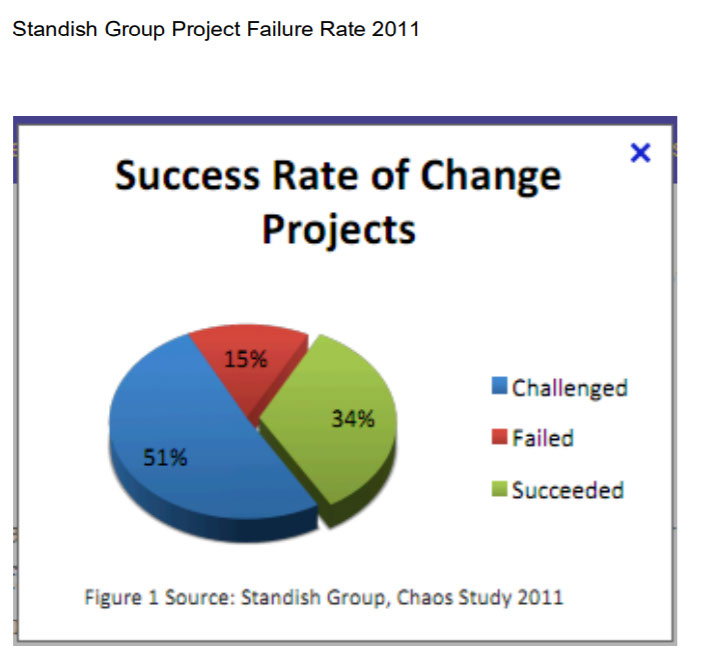
#2 Standish Group Ongoing Research
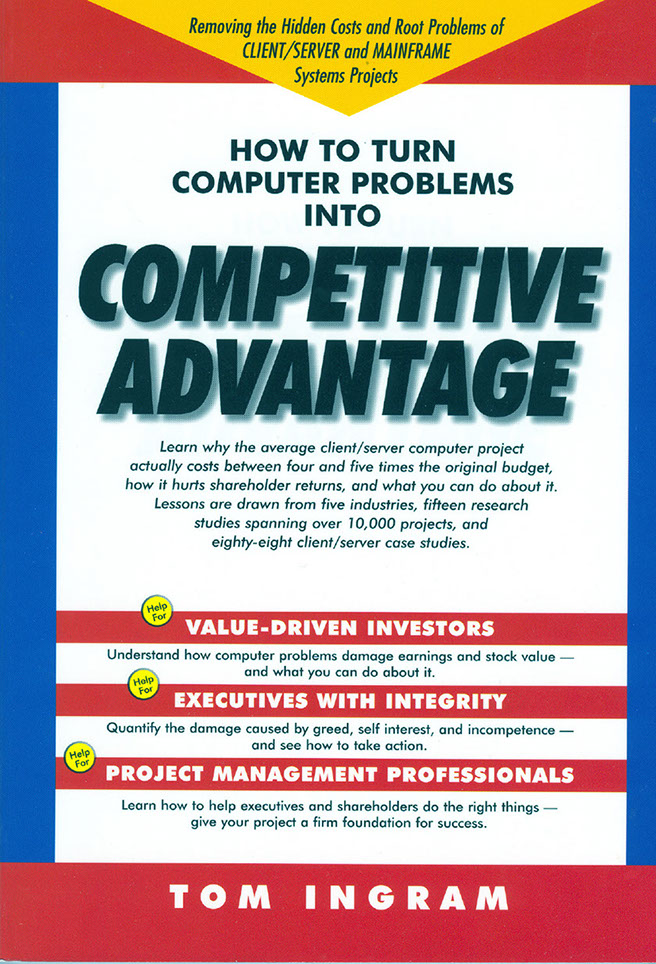
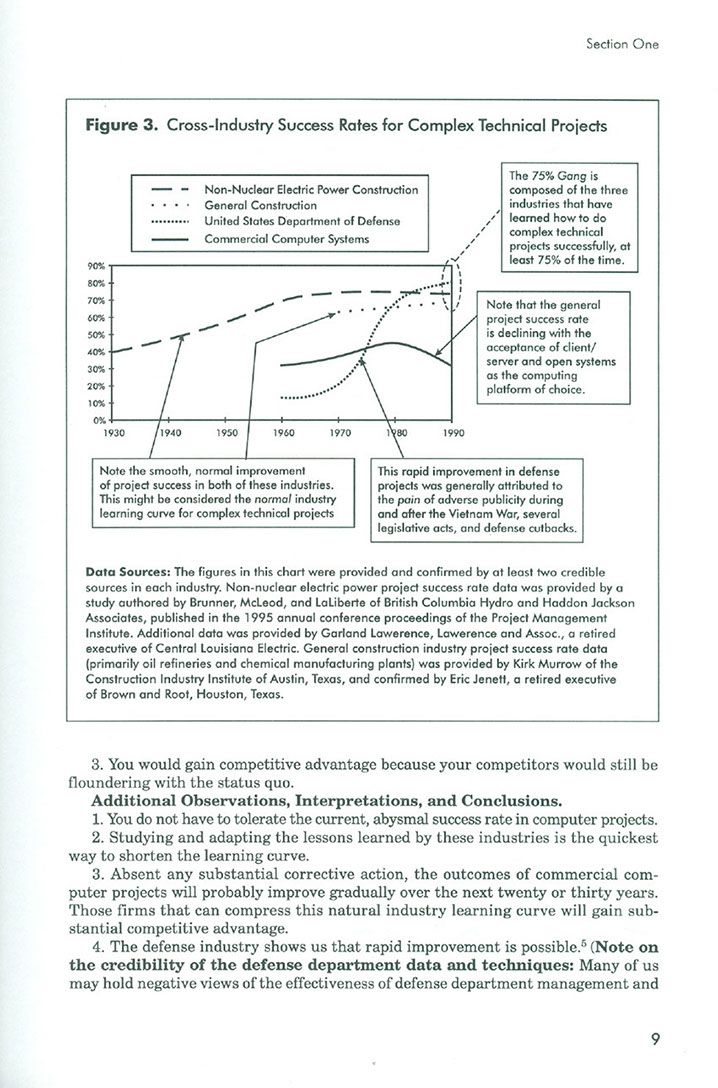
#3 Tom Ingram Research Published 1998 by PMI Inspired by Deming and Crosby... "Quality is Free"
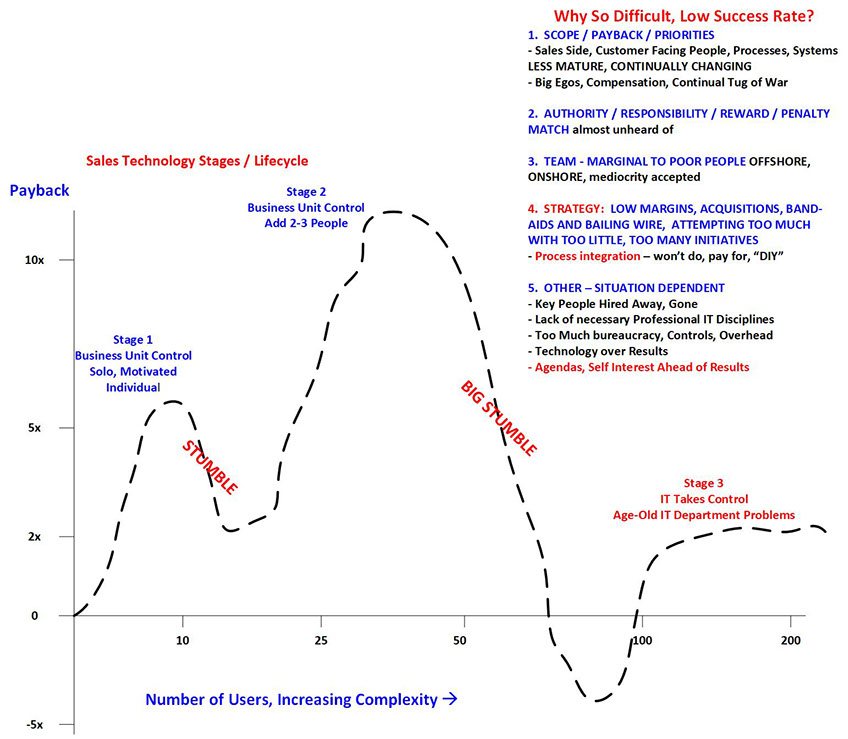
#4: CRM / Sales Technology Lifecycle
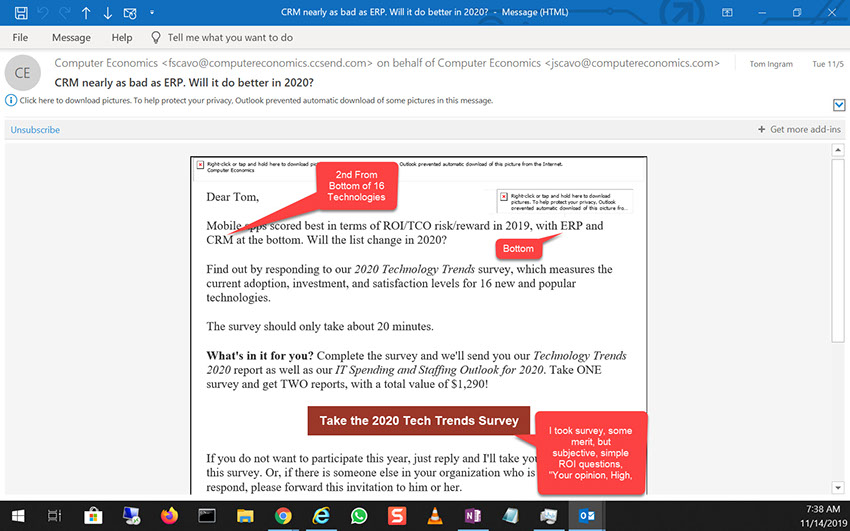
#5: Computer Economics, 2019 CRM 2nd Worst
Additional Major Influences:
#5. Robert Schaffer, Rapid Results, GE Workout, Effective Demand Making Click for Summary
#6. George C. Marshall, Growing Leadership, Effective Delegation, Matching Authority and Responsibility, Removing or Promoting Rapidly Click Here, Search on "Marshall"
#7. Warren Buffett, Thinking Like an Owner, Execution over Technology, How to Value Technology Projects and Companies Click Here, Search on "Buffett"
#8. Peter Drucker, Effective Executives, Test of The Marketplace (Results), Hiring CEO for Key Strategic Need of the Business Click Here, Search on "Drucker"
Additional Thanks To:
- Michael Porter for Strategy
- The Project Management Institute
- The Institute of Management Consultants
- Jack Welch, Mike Grimes, Damian Thomas of GE
- Geoff Moore, Jeff Miller, Marcy Tuttle, "Urgent Compelling Need" Theory Click for Summary
- Cambridge Technology Partners for Rapid Results Methods
- Dun & Bradstreet Software for Process Improvement, Reengineering
- IBM, Xerox for Professional Selling Skills, Excellence, Best Possible Customer Service, Respect for the Individual